Tool Calling
LLMs for Data Analysis in R
R/Medicine 2026
How do LLMs actually work?
On their own, can LLMs… access the internet? run code? send an email? interact with the world?
LLMs don’t have access to real-time data!
LLMs can’t affect the world!
Tool = function + metadata
- Bring real-time or up-to-date information to the model
- Let the model interact with the world
Tools in R
Tool = function + metadata
Step 1
Write (or find) an R function that carries out your desired functionality.
Tool = function + metadata
Step 2
Document that function for the LLM.
Tool = function + metadata
Step 3: Register the tool
Tool = function + metadata
get_weather <- function(latitude, longitude) {
  weathR::point_forecast(latitude, longitude)
}

get_weather_tool <- tool(
  fun = get_weather,
  description = "Get the weather for a location",
  arguments =
    list(
      latitude = type_number("Latitude"),
      longitude = type_number("Longitude")
  )
)

chat$register_tool(get_weather_tool)Tool = function + metadata
Now the model can tell us the weather
◯ [tool call] get_weather(lat = 37.7749, lon = -122.4194)
● #> [{"time":"2026-05-01 14:00:00 PDT","temp":65,"dewpoint":1…
Here's the current weather for San Francisco:

**Current conditions (May 1, 2:00 PM PDT):**
- Temperature: 65°F
- Conditions: Mostly Sunny
- Humidity: 72%
- Wind: WSW at 7 mph
- Chance of rain: 0%
type_() functions
type_() functions
type_boolean(description = NULL, required = TRUE)

type_integer(description = NULL, required = TRUE)

type_number(description = NULL, required = TRUE)

type_string(description = NULL, required = TRUE)

type_enum(values, description = NULL, required = TRUE)

type_array(items, description = NULL, required = TRUE)

type_object(
  .description = NULL,
  ...,
  .required = TRUE,
  .additional_properties = FALSE
)How does tool calling work?
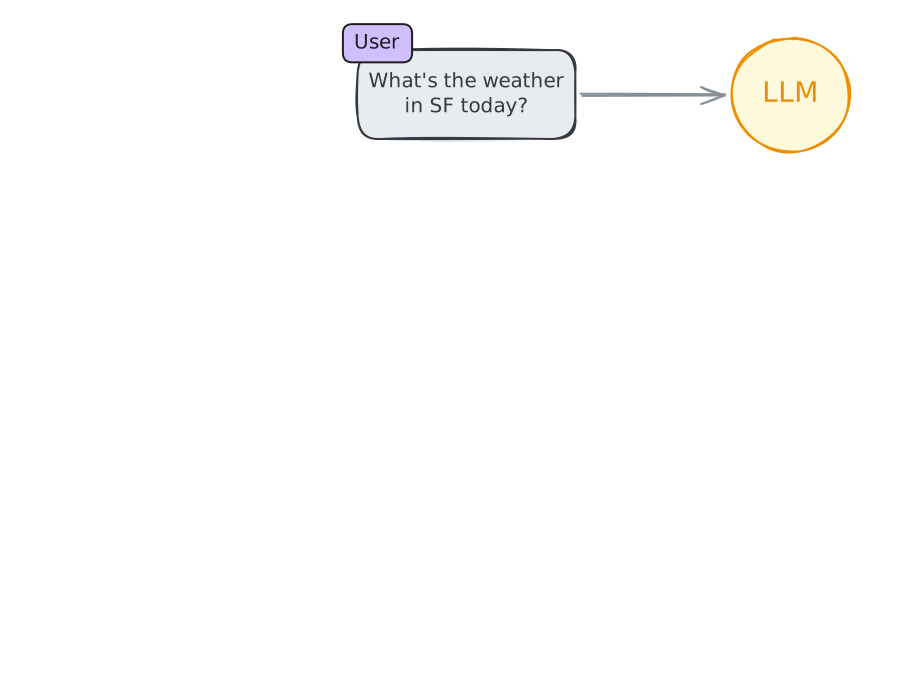
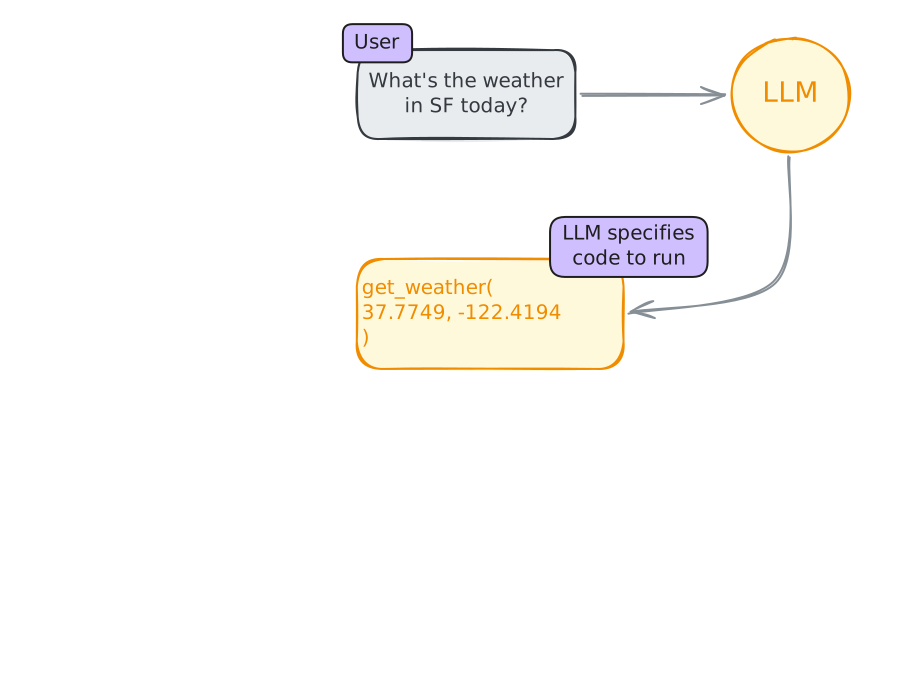
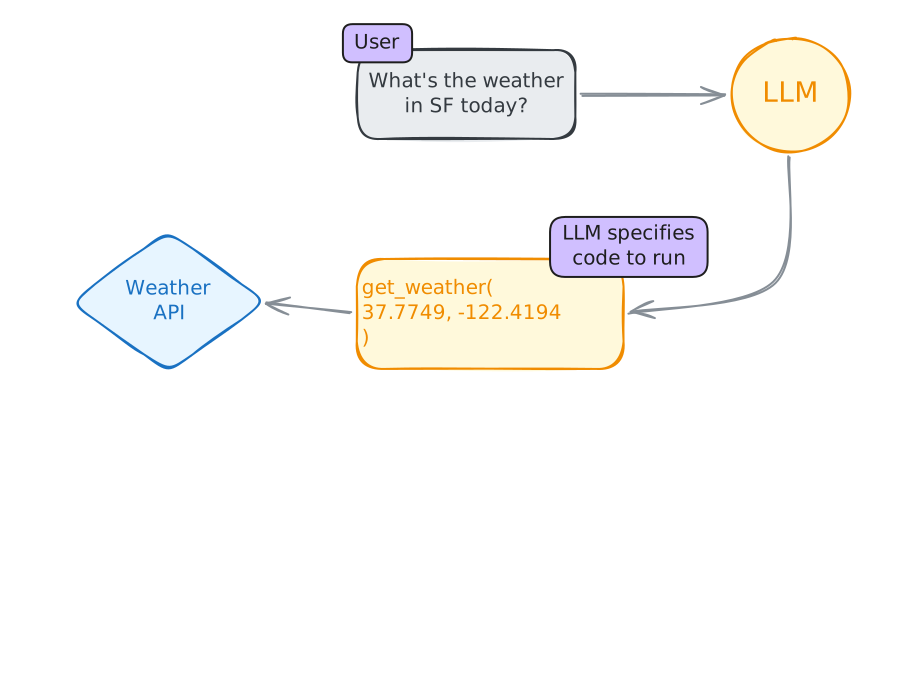
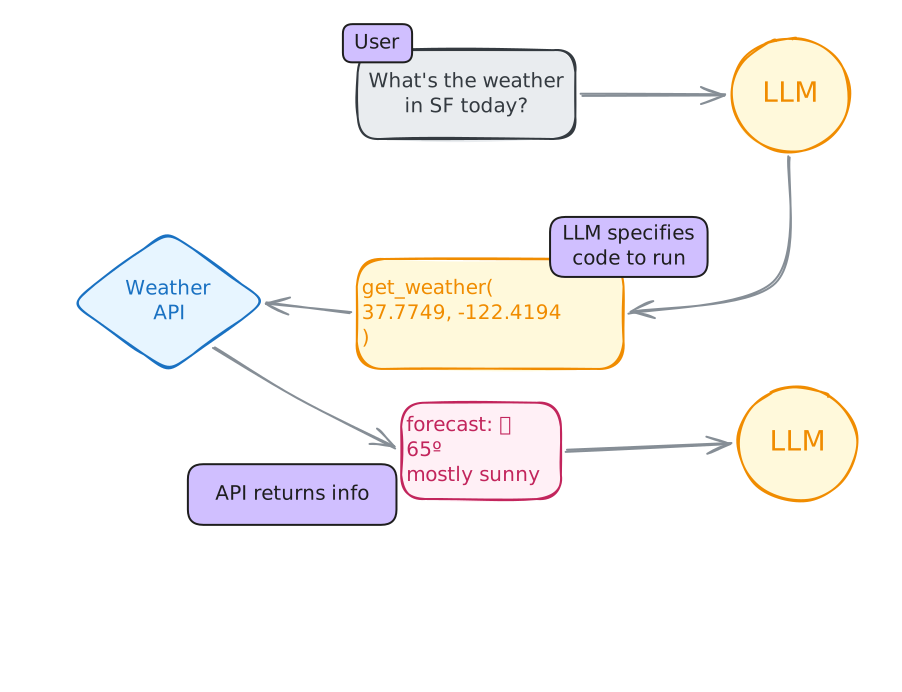
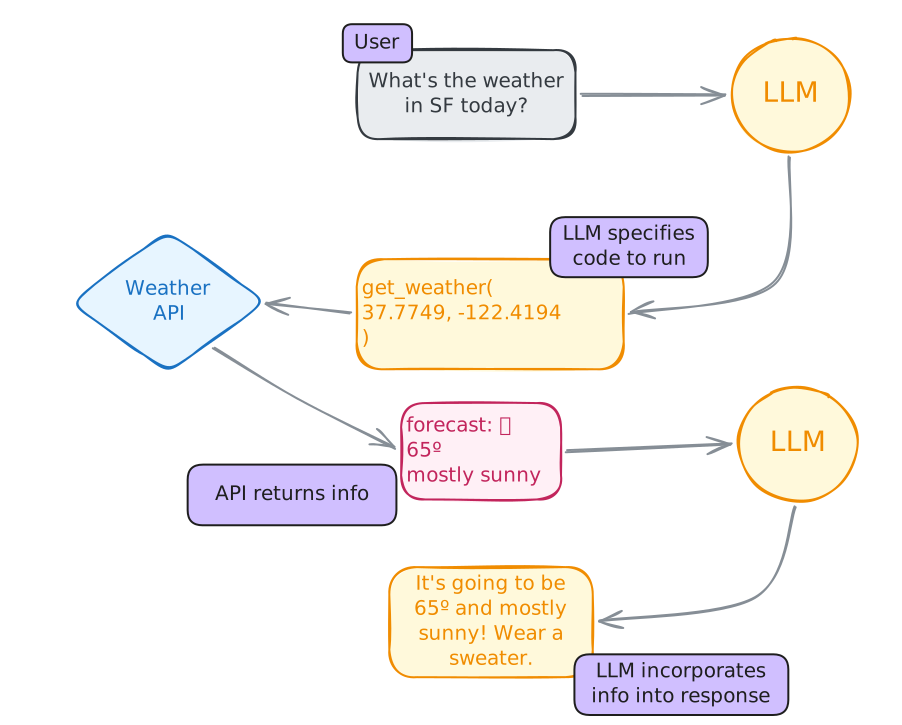
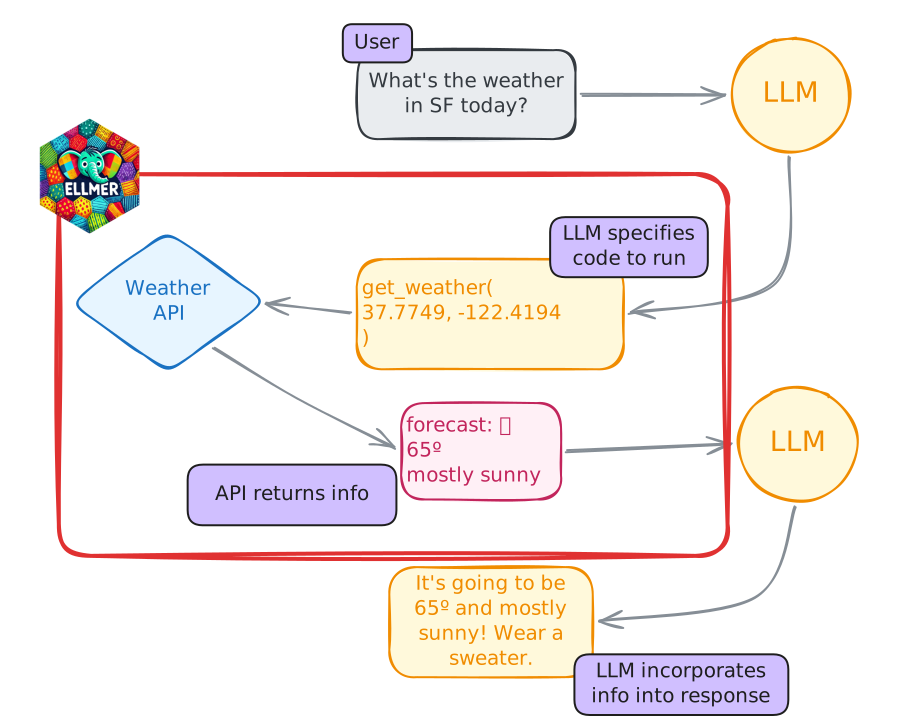
The LLM cannot run code by itself!
It just requests that tools be run.
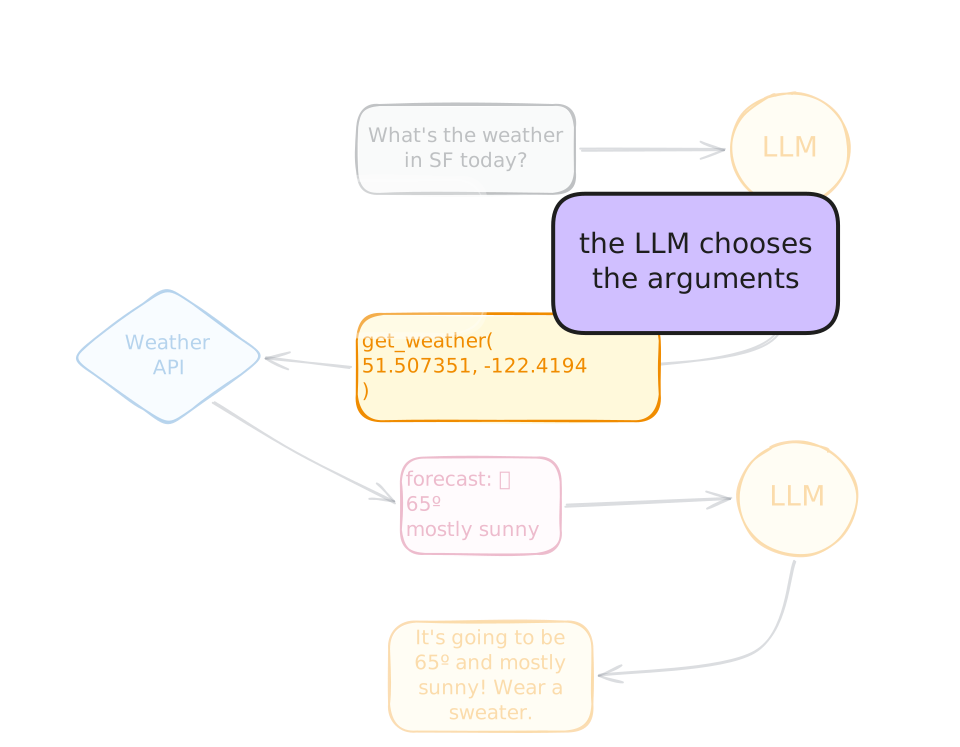
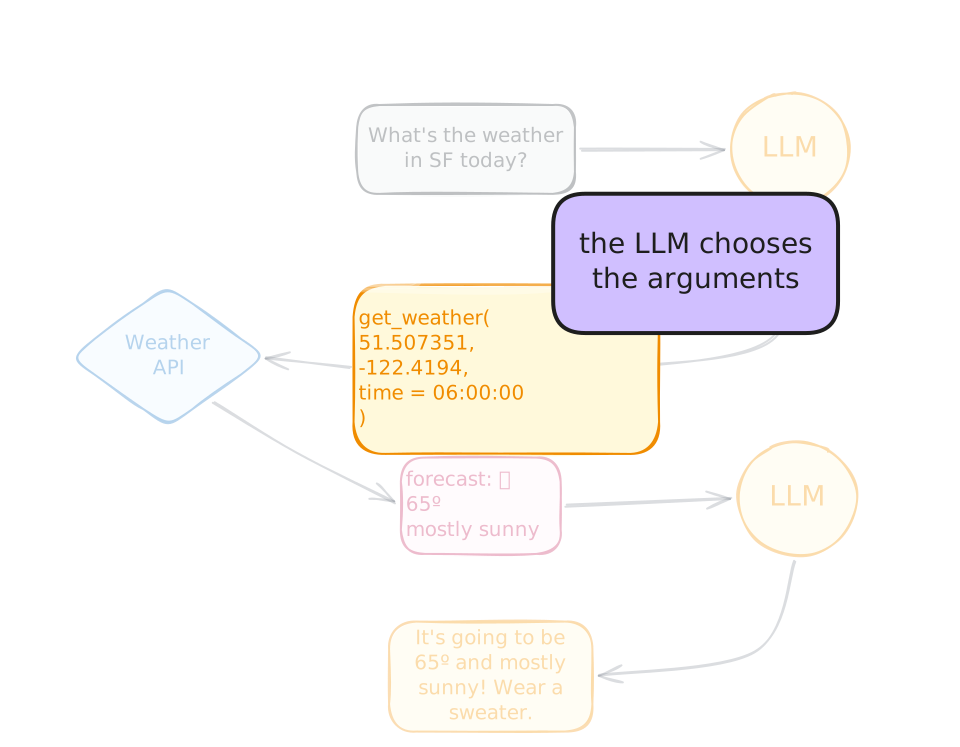
The LLM controls:
- When the tool is called
- How the tool is called (i.e., the arguments)
Helper function: create_tool_def()
Using model = "gpt-4.1".
tool(
  stats::rnorm,
  "Generates random deviates from the normal distribution with specified mean and standard deviation.",
  n = type_integer(
    "Number of observations. If length(n) > 1, the length is taken to be the number required.",
    required = TRUE
  ),
  mean = type_number(
    "Mean(s) of the normal distribution. Defaults to 0.",
    required = FALSE
  ),
  sd = type_number(
    "Standard deviation(s) of the normal distribution. Defaults to 1.",
    required = FALSE
  )
)Your Turn 06_tool-calling
Write a
get_country_spending()function that takes a country name and year and returns health spending by purpose.Wrap it as a tool with
tool()and register it.Ask the model about spending for a specific country.
06:00
Some questions
Does the model have access to the data?
No.
What does the model control?
- When to use the tool.
- What arguments to pass to the function. In this case, just the year and country.
How could we make this function better?
- Give the model access to the list of countries and years available.
- Think through failure modes.
Built-in web search tools
Also available: openai_tool_web_search(), google_tool_web_search()